There's Always a Woman Who Picks It Up
The theme for International Women's Day in 2027 is a question: How much longer?
I've been trying to work out how to write about it and I've landed on starting at the wrong end, not with the crisis but with the committee nobody gets promoted for.
Stay with me.
The mechanism
Here's a pattern you already know, even if you've never named it.
When an organisation needs something done but won't fund it, the need doesn't go away. The work still has to happen. So the organisation does the only other available thing: it relies on somebody to absorb the cost personally.
And it is remarkably consistent about who that somebody is.
The social committee. The onboarding nobody's assigned. The colleague who needs managing before she can do her job. The handover document that didn't exist until you wrote it on a Sunday. The mental map of who's struggling and who needs checking on.
None of it appears on a timesheet. All of it is load-bearing and if you took it away tomorrow, the organisation would notice immediately and still not budget for it.
That's the mechanism. A system underfunds something it genuinely requires and then quietly relies on a woman to cover the gap out of her own hours, her own health and her own money.
The same mechanism, somewhere much worse
In July, UN Women published a report called Beyond the Breaking Point. It surveyed 855 women-led and women's rights organisations across 52 crisis- and conflict-affected countries, the ones running shelters, legal aid, maternal health outreach, safe spaces.
At least a million women and girls have lost access to critical support since January 2025. Two in five of those organisations expect to close within the year.
Here's the kicker…
Nearly two-thirds of them report staff working without pay to keep services running. Almost half report rising burnout across their teams.
The money disappeared. The need didn't. So it got absorbed personally, by women, most of them living inside the same crisis they were responding to.
I want to be careful here, because these two things are not the same size and I'm not going to pretend they are. An unpaid committee in a Brisbane office and a woman running a shelter for free while her own house is unsafe, are different in every way that matters.
But the mechanism is identical. And so is the assumption underneath it.
That there will always be a woman who picks it up. And that she can be relied on not to send an invoice.
Why I think this matters to you specifically
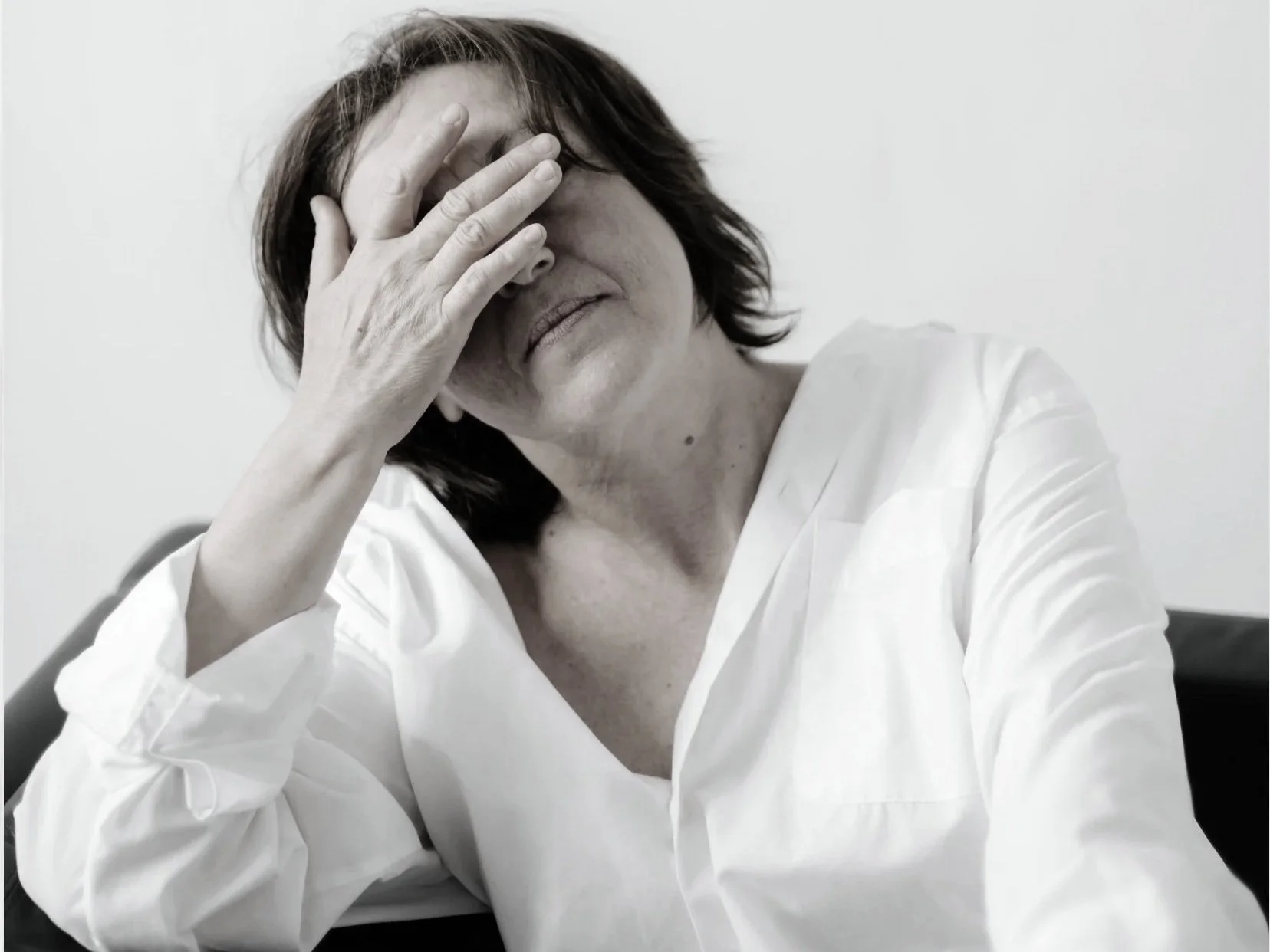
Most of the women I work with are in their forties and fifties and almost all of them are carrying something that nobody is paying for.
Here's what I've noticed about how they describe it. They don't describe it as a cost. They describe it as who they are. I'm just the sort of person who notices. Someone has to do it. It's easier if I just handle it.
That framing is the thing that makes the arrangement work. If the work were understood as unpaid labour, somebody would eventually ask why it's unpaid. But if it's understood as a personality trait, there's nothing to ask about.
I've written before about the rules women absorb before they're old enough to question them, be agreeable, be helpful, put others first. This is what those rules are for. Not your character. The arrangement.
And the reason I'm telling you about a UN report in a blog mostly read by Australian women in midlife is that it's the same arrangement, scaled up until you can see its shape clearly.
When you can see the mechanism at that size, it becomes much harder to keep believing it's a personality trait at yours.
What I'd ask you to do with this
Two things, and they're different sizes on purpose.
The small one: have a look at what you're currently carrying that nobody's paying for and try describing it as labour rather than as temperament. Just as an experiment. Notice whether that changes what you think should happen next.
The large one: if you give money, or you know someone who decides where money goes, send them the report. It's called Beyond the Breaking Point, it's free, and the summary takes ten minutes. And if you do give, give to women's organisations directly and give it unrestricted, not to a project, to the organisation. What's killing them isn't a shortage of good projects. It's the disappearance of the money that keeps the lights on.
The full argument is in this week's episode. It's the shortest one I've made and the hardest.
Source UN Women, Beyond the Breaking Point: The continuing impact of funding cuts on women's organizations in humanitarian settings, published 10 July 2026. Survey of 855 women-led and women's rights organisations across 52 crisis- and conflict-affected countries.