The Rules You Didn't Write And Why You're Still Living By Them
Before you could form an opinion, you were handed a set of rules.
Be agreeable. Be helpful. Don't take up too much space. Put others first. Wait your turn. Be grateful for what you have.
Nobody sat you down and read them out. They didn't need to. They came through the way your mother navigated a room, the way your teacher responded when you spoke up, the way the culture around you rewarded certain kinds of girls and quietly penalised others.
You absorbed them before you had the language to question them. And then you grew up and called them your personality.
After a lot reflection, I’ve realised that the places in your life where you are holding yourself back are probably not character flaws. They're installed behaviours. Rules you inherited, internalised and are now enforcing on yourself, often more rigorously than anyone around you would bother to.
That's worth getting angry about.
What the evidence actually says
At the current rate of change, it will take an estimated 140 years for women to be equally represented in leadership. 47 years for equal representation in parliament. 286 years to close gaps in legal protection.
Those are not gaps created by individual women making poor choices. They are the aggregate result of a set of rules, applied consistently, across generations, that told women to make themselves smaller and called it virtue.
And those rules are still running. In your salary negotiation. In your relationship. In your superannuation balance. In the trip you haven't booked yet because you're waiting for the right moment or the right company.
Let's be specific.
Where the rules show up
In your relationships. You stay too long. You have the conversation too late, or not at all. You shrink your needs to keep the peace and then resent the peace you kept. A third of women in long-term relationships have stayed longer than they wanted to not because they didn't know better, but because the rule said leaving was failure and staying was loyalty.
The rule is wrong. Know what you need. Say it. And be willing to walk away from what no longer fits, without requiring a catastrophe to justify it.
In your health. Women are twice as likely as men to experience anxiety and stress-related disorders. Not because we're weaker. Because we've been running on other people's priorities for so long that our own needs have become background noise.
Your health is not a reward you get after everyone else is sorted. It's the foundation everything else runs on. Treat it accordingly.
In your money. Only 31% of Australian women invest in shares or stocks, compared to 45% of men. Women retire with 42% less superannuation than men. Some of this is structural, the pay gap, career breaks, part-time work. But some of it is the rule that said money was unfeminine, that wanting wealth was greedy, that financial ambition was somehow at odds with being a good woman.
It isn't. Wealth is options. Wealth is freedom. Wealth is the ability to leave a situation that isn't working without having to do the maths on whether you can afford to.
If you're in a relationship, have your own account. Your own investments. Non-negotiable, regardless of how solid things feel right now.
In your career. Women apply for roles when they meet 60% of the criteria. Men apply at 100%. In the UK, 60% of women accepted a salary offer without negotiating, compared to 48% of men.
That's not imposter syndrome. That's a rule, the one that said a good woman doesn't push, doesn't demand, waits to be recognised. The rule costs you, compounded, across an entire career.
Apply for the role. Ask for the raise. Stop waiting for someone to notice what you're worth and start telling them.
In your sense of identity. Your name. Your ambitions. Your version of what a good life looks like. How much of what you're currently living was chosen and how much was inherited?
I changed my name when I married. Getting it back took years, multiple government departments, contradictory information and a level of bureaucratic obstruction my ex-husband never encountered and never will. The system wasn't designed to make that easy because the assumption built into the system was that women wouldn't leave, and if they did, the paperwork should reflect the cost.
Your identity is not a marital asset. It is not a transaction. It belongs to you, before, during and after any relationship.
In your willingness to take up space in the world. Only 27% of women take solo trips, despite growing interest, because of safety fears and notably social judgement. We wait for permission to see the world the same way we wait for permission to take up space in a meeting, a negotiation, a conversation about our own future.
You don't need permission. You are a full person. Act like it.
The bigger picture
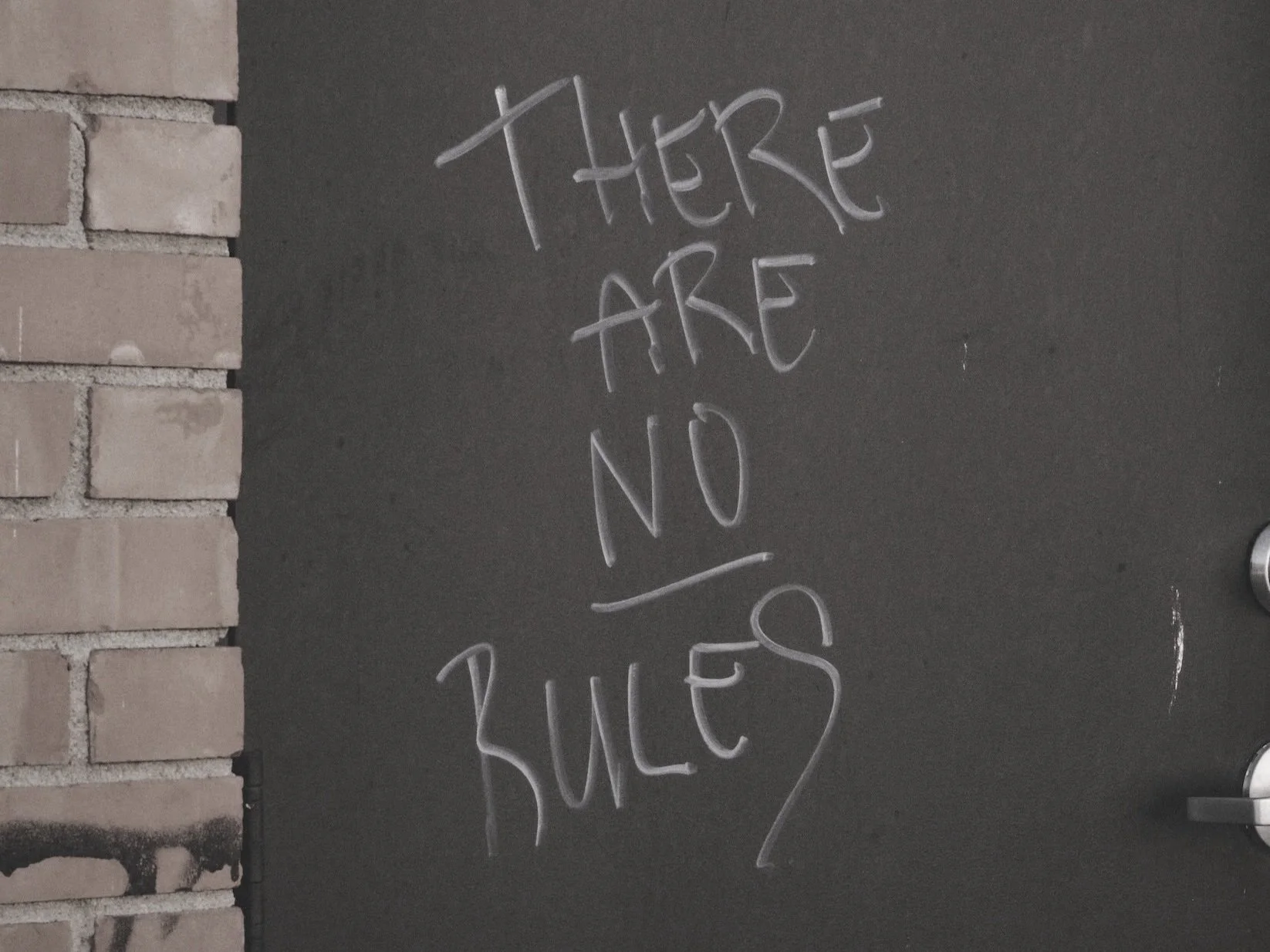
Helen Mirren said don't let other people make the rules for you. Make your own. And basically there are no rules.
She's right. But I'd go further.
The rules feel real because they were enforced by real people, institutions, culture, environments in real moments across your entire life. Dismissing them as simply not existing doesn't account for the fact that they shaped you before you had any say in the matter. You can't think your way out of conditioning. You have to act your way out one decision at a time, in the specific areas where the rules have cost you the most.
Start where the frustration is loudest. That's usually where the rule is running hardest.
You didn't write these rules. You don't have to keep living by them. But nobody is going to revoke them on your behalf that part is yours to do.
The Second Chapter Quiz was built for this moment.
When you know something needs to change but you're not sure where to start, it shows you exactly which area of your life is most out of alignment right now.
Two minutes. Specific results. A clear place to begin.