The One Thing Holding You Back Isn't What You Think
I want to tell you about a version of me that stayed too long.
Not because she was weak. Not because she didn't know what was happening. She knew exactly what was happening. The marriage was broken genuinely, unfixably broken and she could see it with complete clarity.
She stayed anyway.
Not out of love, not really. Out of familiarity. Out of the fact that the known pain of staying felt more manageable than the unknown terrain of leaving. She had been in that relationship so long that she had organised her entire sense of self around it. Leaving didn't just mean leaving him. It meant stepping into a version of her life she couldn't picture, couldn't plan for, couldn't control.
So she stayed in the grey. The limbo. The place where you're not happy but you're not gone either and the days accumulate quietly around you while you wait for something to make the decision easier.
Nothing made it easier. It never does.
What eventually shifted wasn't courage in the dramatic sense. It was the slow, exhausting realisation that staying was costing more than leaving. That the pain of the known had finally outweighed the fear of the unknown. That I was disappearing not in a crisis, not with a bang, just gradually, in the way that women do when they've been accommodating everyone else's comfort for too long.
The day I left, I had no idea who Andrea was anymore. She had been gone for a while. It would take years to find her again.
I'm grateful to my thirty-something self for leaving anyway.
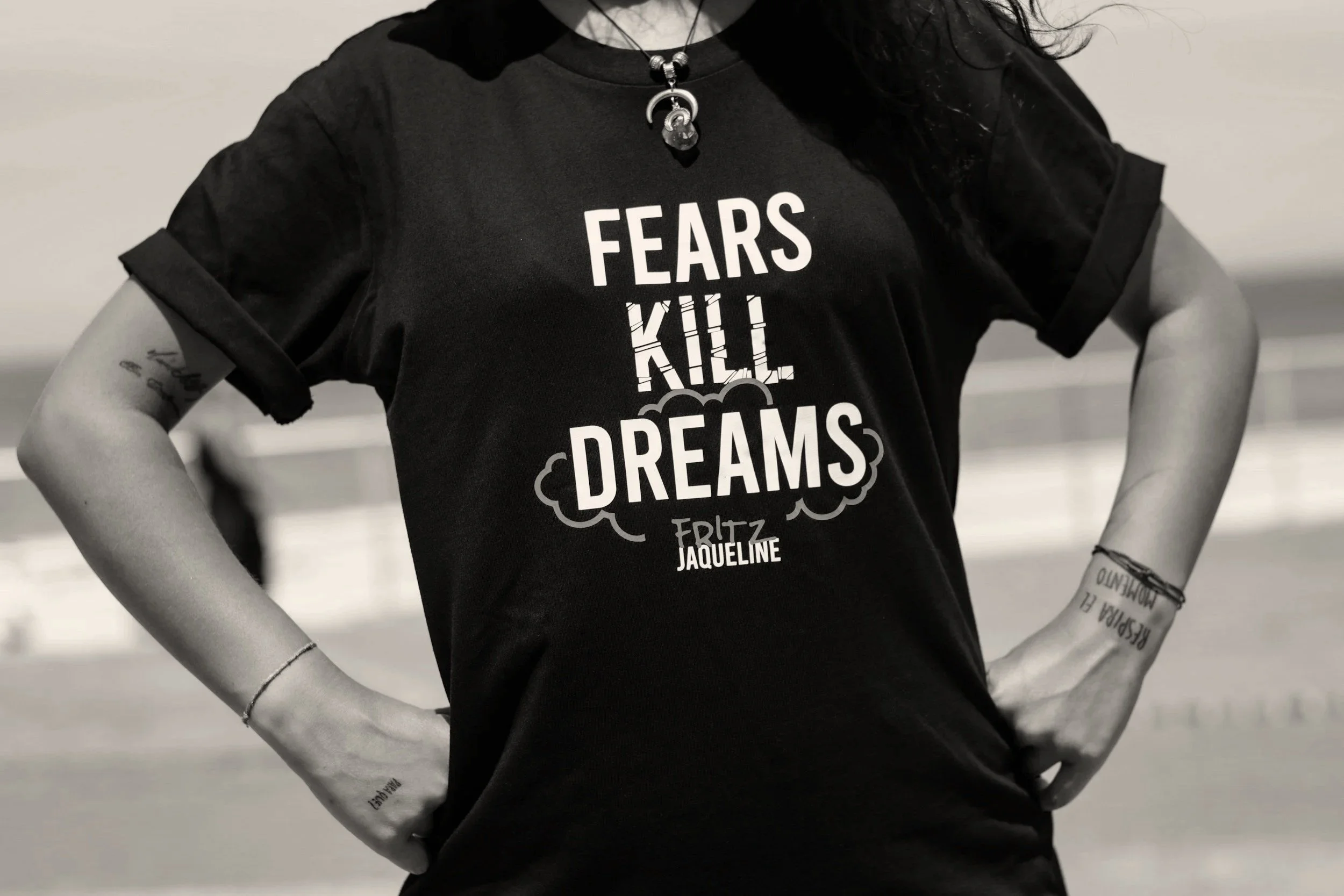
What inaction actually is
We talk about inaction like it's a passive state. Like being stuck is something that happens to you while you wait for the conditions to change.
It isn't. Inaction is a choice, made repeatedly, often unconsciously, always at a cost.
The cost is rarely dramatic. It doesn't announce itself. It shows up as the low-level hum of a life that doesn't quite fit. The conversation you keep not having. The decision you keep deferring. The version of yourself you keep promising you'll get back to when things settle down.
Things don't settle down. You know this by now.
What keeps most women stuck isn't a lack of information or capability. It's the gap between knowing what needs to change and being willing to tolerate the discomfort of actually changing it. The brain is extraordinarily good at generating reasons to wait, better timing, more preparation, more certainty, more confidence. All of it is the same thing dressed differently: a preference for familiar pain over unfamiliar possibility.
The waiting feels responsible. It feels prudent. It is neither.
The story you're telling yourself
Underneath the waiting, there is almost always a story.
I'm not ready. I'll do it when I have more experience, more money, more support, more clarity. When the kids are older. When things are less busy. When I feel more like the person who does this kind of thing.
Here's what I know after years of sitting with women in exactly this place: the story is not the truth. It is the installation, the accumulated weight of every time you were told to wait, to be careful, to make sure, to not risk too much.
You question the story by asking where it came from. Not as a therapeutic exercise, but practically. Did someone tell you this? Did you absorb it from watching how the women around you moved through the world, or didn't? Is it yours, or did you inherit it?
Most women, when they look honestly, find that the story was never really theirs. It was handed to them, early and consistently, by people who were themselves operating under the same set of handed-down rules.
You can put it down. It doesn't require a breakthrough moment. It requires a decision, followed by a action, followed by another decision, followed by another action.
That's the whole method. There isn't a more sophisticated version.
What comes after the decision
I won't tell you it gets easy once you act. It doesn't, not immediately.
What changes is the direction of the discomfort. Instead of the grinding, static pain of staying in something that isn't working, you have the sharp, moving discomfort of actually changing. One is a life sentence. The other has an end point.
Women who have made the hard call, left the job, left the relationship, left the version of their life that stopped fitting consistently say the same thing. Not that it was easy. That they wish they'd done it sooner. That the fear was larger than the reality. That the version of themselves on the other side was worth the cost of getting there.
You don't need perfect conditions. You don't need to feel ready, ready is a story too.
You need one honest look at what staying is actually costing you. And then you need to move.
If you're in the grey right now, that limbo space where you know something needs to change but you haven't moved yet the Second Chapter Quiz will show you where to start.
It identifies exactly which area of your life is most out of alignment. Not in a vague way. Specifically. So when you're ready to act, you know where to point it.
Three minutes. Clear results.